
Embed Code
Nayelli Crespo
"They taught me how to respect our q’nan ulew. It does not belong to us, but we are part of the q’nan ulew, that is Mother Earth in Maya."
 Solutions
CLIMATE REALITY LEADER Trained: Miami, 2015
Nayelli Hernandez Crespo
A serial entrepreneur and activist, Nayelli Hernandez Crespo launched the first solar energy store in the state of Yucatàn in Mexico at just 20 years old. Since then, she’s advised Indigenous women entrepreneurs on business strategy and sustainability and run for Senate on a climate platform – and she’s only getting started.

How did you first come to the climate space?
I started to be an environmental activist when I was 17 years old, and that is because my grandfather and my grandmother were ejidatarios , farmers, indigenous Mayas.
They taught me how to respect our q’nan ulew. It does not belong to us, but we are part of the q’nan ulew, that is Mother Earth in Maya.
When I went to the university, I decided to study economics. And that is because I’ve always been interested in how this system works and try to change a little bit and make better policies about green economy.
So I start my first business when I was 20 years old about renewable energy. I was the first store in my state, in Yucatan. So I became a pioneer in this sector. A lot of people started to ask, “Well, what is a solar panel? How does that work?”
I started from zero to share the information about how this technology works. But I started to work so hard and to feel tired, a little disappointed.
I started to think that maybe it's not enough, or maybe this is not going to change. And how I can connect my entrepreneurship with my activism?
When you start to work like an activist, you never are waiting for a thank you. You always do, because you truly believe in the cause, because you love what you do, and you want to make a change.
How did you end up training as a Climate Reality Leader?
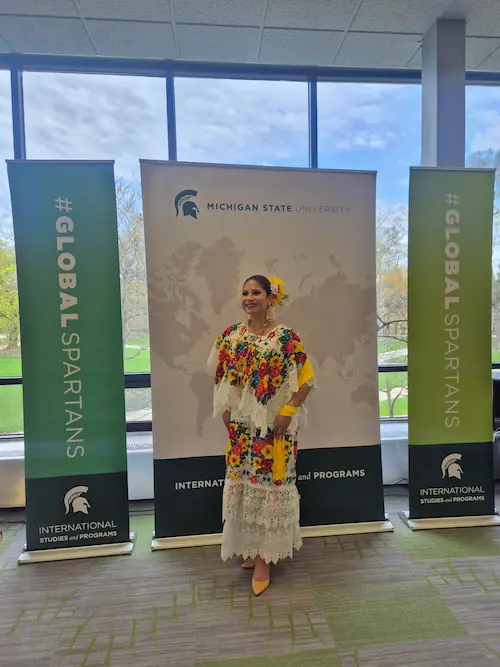
As I was thinking about that, in Facebook appeared an invitation to The Climate Reality Project, to a training in Miami.
I decided to go. I start to feel that maybe I can find some answers there. And I went to Miami in 2015. That was the connection. That was the information that I missed. I needed to listen from someone that is an activist, like chairman Al Gore.
He truly believed that we can make a change. And then in that training, he provided us the information about how I can send a letter to my deputy, to my mayor. And that is the tool that we needed.
So I start to knock [on] doors when I came back from Miami. I went to the Congress. I wait for my deputy, the congressman that was in charge [of the] environmental sector. And he was like, “Who are you? Why do you want to speak with me?”
I'm a citizen. I want to work with you. I want to share with you some ideas that I learned [from] my training in Miami.
I start to support entrepreneurs in my state to improve their business model. That was a clean tech challenge. We support more than 300 young entrepreneurs to improve their business model with trainings, with finance, with access to finance.
And then 2018 came. Mexico City was the host for a [Climate Reality] training. And it was an amazing event, almost 2,000 leaders from Latin America and Mexico. In that moment, the Green Ring happened. I was there when they, with Mr. Al Gore, announced that I was the winner of that year. That moment changed my life.
When you start to work like an activist, you never are waiting for a thank you. You always do, because you truly believe in the cause, because you love what you do, and you want to make a change.
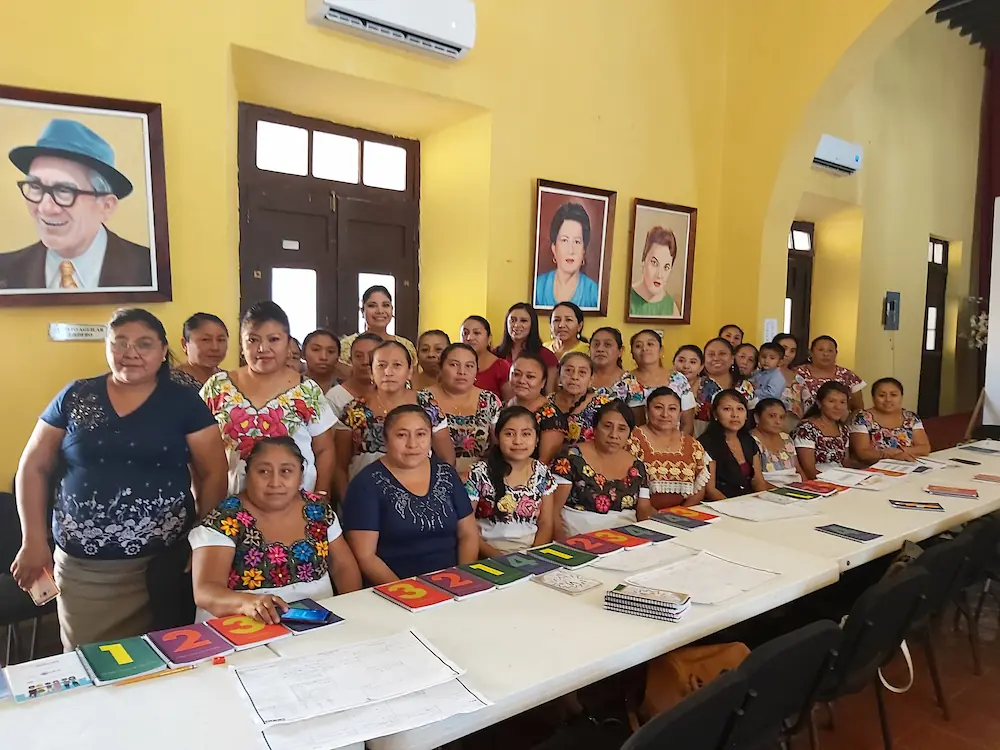
So, I start to wake up a movement of women. And why women? Well, Mexico is a country of women. We are most of the population. Almost 60% of the population in Mexico, we are women.
How did attending these trainings shape your work?
After the Green Ring and Mexico City, I came back to Yucatan, and I started to work with Indigenous women entrepreneurs. To teach them how to improve their business model, but in a green economic way. We built a community that has more than 9,000 women in Mexico and Guatemala. And they are amazing. They are making a lot of changes.
I think one of the things that I learned, that the Indigenous women have the knowledge. They're entrepreneurs. They always think about their families and how they can help their communities.
After Mexico City, I came back and I'm trying to push like a very direct way. We need to attend the climate crisis.
But actually they start to tell me, “You know, Nayeli, we are very worried about that, but we need to bring food.”
So, I understand that, okay, so we need to build a connection. If they improve their business. We can wake up a leadership, and start to make groups to support, to push.
That is the army that we need to take care of the environment. So after they improve their business model, I start to teach them the importance and to provide them the information about the [climate] crisis.
So, I start to wake up a movement of women. And why women? Well, Mexico is a country of women. We are most of the population. Almost 60% of the population in Mexico, we are women.
They are so generous. When we start to speak about climate change and the connection that we have, they start to share their own knowledge with me. The Mayas people, we always do this to take care of the water. We can do this. We can start from here and start from that. We can support the farmers in that type of way.
I truly believe that women are the key in Mexico. I always told them, the women, we are suffering more of the impact. And that is the science. The numbers are there. So, believe me, we need to be part of the solution.
And sometimes I told them, “Maybe, I asked you that do more. But because I know that your heart, your kindness is unlimited, and you have that deep connection with the community, I really know that you can do it.”
At the beginning, the other groups were like, “What is this girl? What is she doing?”

On top of your work as an activist and entrepreneur, you ran for federal office in Mexico. How did that happen?
In 2024, a political party invited me to be the first candidate, activist candidate for the Senate in a federal level.
In that moment, I said, “No.” Thank you, but I'm an activist. I'm an entrepreneur. I'm not interested.” But I had a meeting with my community, and they asked me, “Please do it. You have to do it. We are going to support you.”
And I told them, “It's very difficult that I can win.”
And they told me, “That is not the goal. The goal is that they have to see you. That it's possible that someone else can make a different campaign. And we are going to support you.”
And I remember, again, about Vice President [Gore]. He started a movement in his house. In a farm. And we are 4.5 million now.
So I was like, “Yes. We are going to do this.”
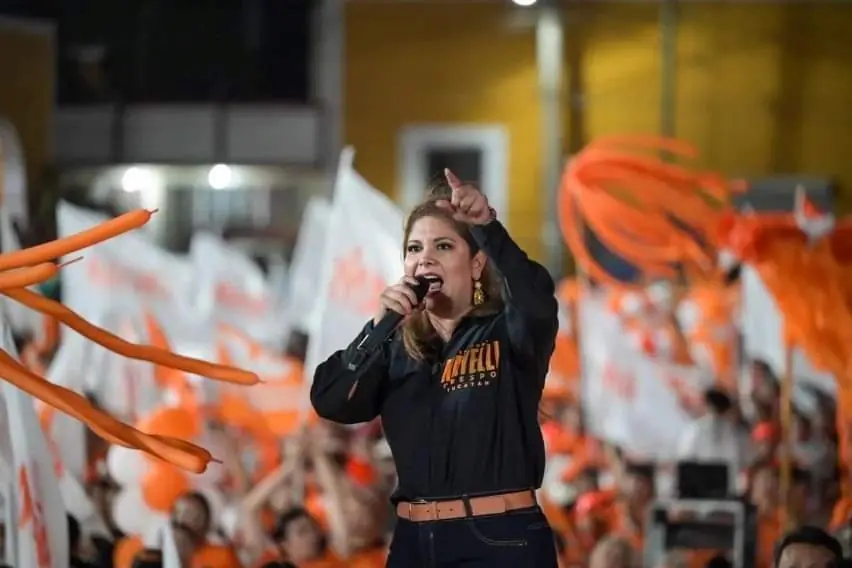
So I start my campaign on a bicycle with them. I have the photos. It was amazing.
At the beginning, the other groups were like, “What is this girl? What is she doing?”
In the debates, in the forums, I always [spoke] with a lot of confidence, because we are speaking from the truth. I was very brave and I made my proposal about climate change. And the people start to listen.
I received more than 100,000 votes in all the state. People that believe in the proposal, believe in the campaign, believe that they can be part of something different. So yeah, for sure we can make a difference.
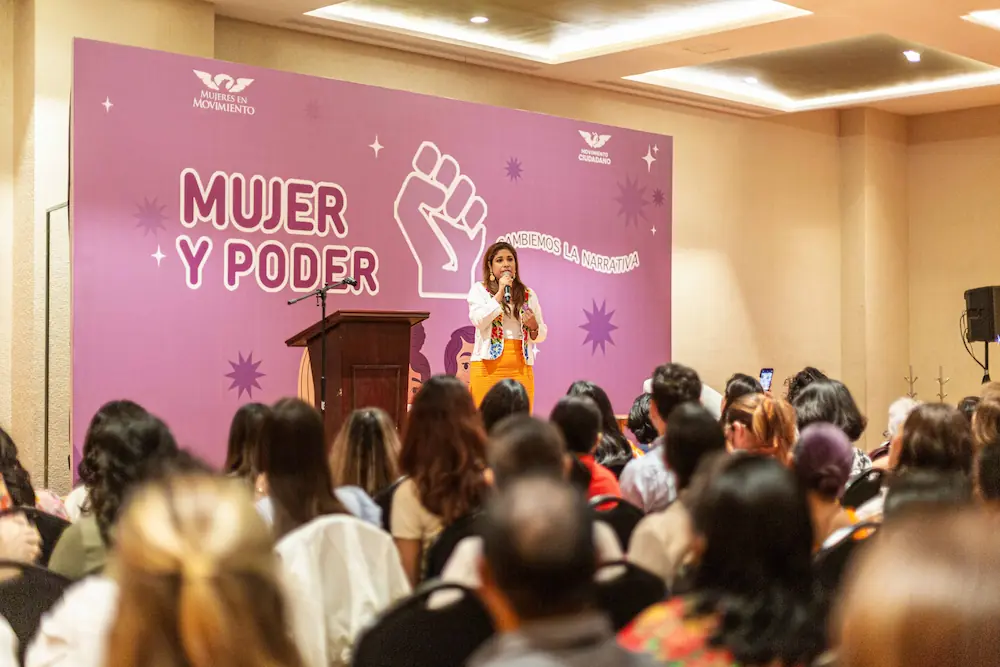
You've been in politics. You've been an entrepreneur. You've been an activist. Where you see the greatest opportunities for progress?
When we are already understanding the intersectionality about these things,
I think that we start to work in a very separate way. When you approach to the government, they really have to see in you that you're talking with the truth, with data. That is very important.
They have to work with us. Because we are citizens, and we already know what is happening. And that is very, very powerful that we have the information. We need to share the information, but it's very, very important. Sometimes the people start to forget.
Because a lot of things are happening at the same time It's not climate change and climate crisis and every, the other topics. No, it is connected. So, we need to share that information.
I think we need to be brave. Because I already know that some activists, most of them, very young activists, start to ask me, “How can I make my campaign for Congress? I have an environmental agenda.”
So I'm very proud that people that they start to be brave and they start to ask, “How can I make that difference?”
We need to talk about that. We need to speak about politics. We need to speak about [the] climate crisis. And be brave. And that is the only thing that – be brave.
What comes next for you?
I already knocked the door of a Congressman. And I asked him, “We want to work with you, but we need to do more to build an opportunity[so] that the people have access to this [clean energy] technology and also the business.”
You know, we have a lot of sun in Yucatan. We have all that energy that every day we can take and do something else. We are suffering electricity prices right now, and this can be part of the solution.
So we can make something else. We can make a law or maybe push something that in the legislation provides a good environment. So, I really hope that we are going to make some good things in Yucatan.
They have to work with us. Because we are citizens, and we already know what is happening. And that is very, very powerful that we have the information. We need to share the information, but it's very, very important. Sometimes the people start to forget.