Embed Code
Rituraj Phukan
"I feel that having access to the traditional food of our ancestors should have a place in any conversation about climate justice, community health, and resilience."
 Solutions
CLIMATE REALITY LEADER Trained: Istanbul, 2013
Rituraj Phukan
Author, TEDx Speaker, adventurer, and naturalist Rituraj Phukan has become a powerful voice for Indigenous communities everywhere from his home state of Assam, India to UN climate summits. Along with founding the Indigenous People’s Climate Justice Forum, he works with numerous climate and environmental organizations to build resilient communities and inspire young activists to stand up for their future.
What brought you to climate in the first place?
I grew up during the Assam Movement, a student-led agitation against immigration from a neighbouring country, that exploded into civil unrest. Schools were shut down for months at a time and there was widespread violence across the state. Anti-government feelings were intense, and since my family were in politics, we were subjected to social ostracism for a while. I often wondered why people would want to migrate.
When I quit government service and immersed myself in conservation work, I started hearing about global warming and climate change. Then in 2007, I read about the Nobel Prize for the IPCC and Mr. Gore, and some months later, got to watch “An Inconvenient Truth” during a visit to New Delhi.
In 2013, I was selected to go on an expedition to Antarctica to learn about climate change and the impacts of warming on the fragile landscape. One cold and windy day, we were summoned to the deck at 6 AM by Robert Swan, the leader of our expedition and the first man to have walked to both the poles.
We were in an area called the Antarctic Sound and Rob asked. “How many of you believe in climate change?” There were several massive tabular icebergs around us, and he explained they were the remains of the Larsen B Ice Shelf, which collapsed 11 years earlier. That was also the first time I heard about sea-level rise and the displacement of people in low-lying vulnerable nations.
Something clicked and I found my answer to my childhood question about migration! The discussions that day added to my consternation about the future and conflicts when climate migration will accelerate the demographic conflicts in my region.
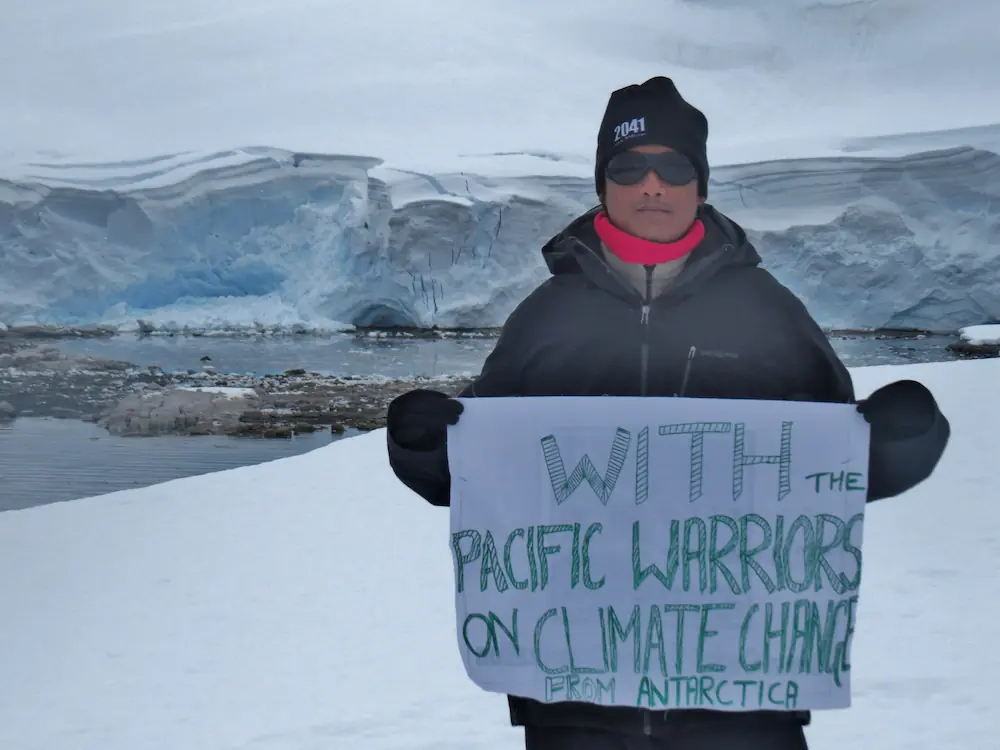
Two days later, while still on the expedition, I received an email asking for solidarity with the Pacific Warriors Day of Action organized by 350.org. So, I became a climate activist in Antarctica, holding up a handwritten banner in solidarity with the 15 Pacific Island nations already feeling the impact of sea-level rise.
Less than three months later, I travelled to Istanbul for the Climate Reality Leadership Corps training, and life has never been the same again. I was not from a science background, and the training empowered me to embark on a journey that I never thought possible.
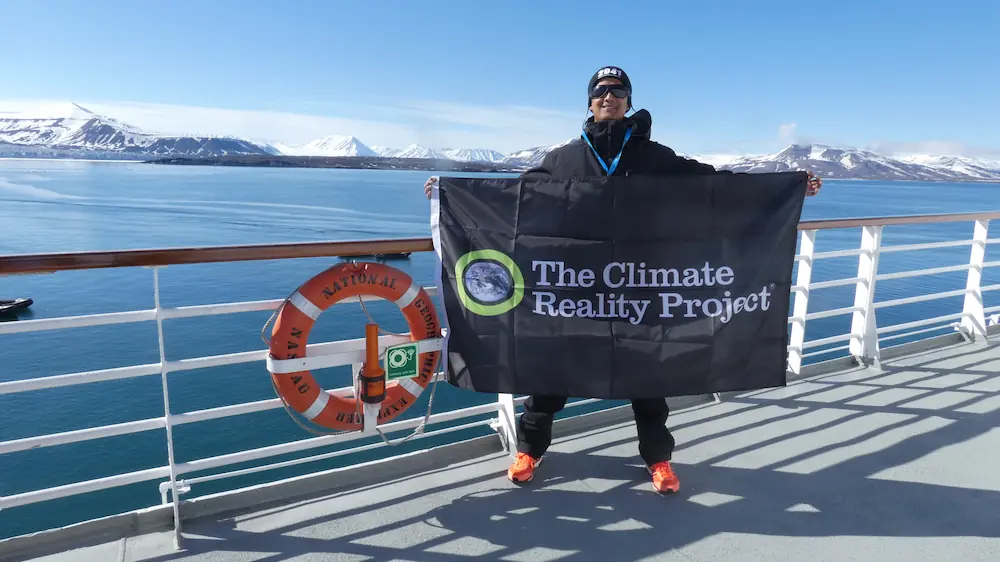
Six years later, in 2019, Rob invited me to join the Climate Force Arctic Expedition to the North Polar region. I was thrilled to travel with the flag of The Climate Reality Project on an expedition that opened my eyes to the cascading impacts of Arctic warming on global climate regimes – including the disruption of the monsoons in India.
I saw the darkening of the snow and ice due to black carbon deposits, as well as melting across much of the Svalbard Archipelago. We learnt about the albedo effect and the feedback loop that was also happening across other mountain regions, specially across the Himalayas. This helpdc me understand why my native Assam, located in the Eastern Himalayan region – one of the fastest warming places on Earth – is among the most vulnerable to floods, heatwaves, and other interconnected consequences.
Today’s youth are well informed about the environmental challenges. They want to make the right consumer choices and are willing to find time to change the world.
A lot of your work focuses on Indigenous communities and climate justice. What do Indigenous peoples bring to the climate movement?
I live in a region where Indigenous traditions and wisdom are still followed and respected by most people. While “sustainability” and “resilience” are buzzwords in urban centers, rural communities where Indigenous people and local communities reside offer functional models which have worked for thousands of years before these words were coined.
Two examples I always like to present to my audience during talks are both from the pandemic lockdown period. When the vaccine became mandatory to access public services, some of my friends were reluctant to take it as they had never been vaccinated.
The bigger question for me was where did they get their health, immunity, and wellbeing from? When I looked around, I found that the number of people wearing glasses, having premature grey hair or even suffering hair loss was substantially less in rural areas inhabited by Indigenous people. The obvious reason was that these communities were consuming freshly produced, local and seasonal foods. There were also less pollution and wastage in these areas.
The other lesson I learnt was about resilience. While city dwellers were dependent on food delivered by the government agencies during the lockdown, rural communities were barely affected as they grow their own foodgrains, raise livestock, and manage fisheries.
I feel that having access to the traditional food of our ancestors should have a place in any conversation about climate justice, community health, and resilience. At the same time, Indigenous food systems have existed for millennia. They are not extractive or exploitative, but are less polluting and should be the focus of harmonizing our relationship with nature. Being a conscious consumer is inherently part of the Indigenous identity, something that can galvanize the climate movement.
You’ve given hundreds of presentations and spoken to audiences all over the world. What is the single most important thing you want people to hear?
I was never a public speaker until I became a part of the climate movement.
I owe a big part of the transformation to the training in Istanbul, where I attended an intriguing session on communicating science. Obviously, my firsthand experiences of warming in the polar regions and across the Himalayas were important, as people relate to personal stories.
My messaging has evolved over the years, starting with the polar impacts to the long-term consequences for my region, to the water crisis, biodiversity loss, food security, and climate justice.
I designed a presentation “Connecting the 3 W’s – Warming, Water & Wildlife,” which combined my experiences in these sectors with global outlooks, local projections, and responses, and could be adopted for students ranging from secondary to university levels. I have delivered this over 200 times in campuses around India.
Lately, I have focused more on Indigenous climate justice with the objective of taking the heritage of the early climate impacted and most vulnerable Eastern Himalayan region of India, the biodiversity-rich region which is also home to over 200 Indigenous peoples and local communities.
I agree with many fellow activists that the climate movement has momentum in the past few years. That is one of the reasons I am engaging more with the youth, including young, elected lawmakers and young political leaders, as well as those in student politics across universities.
Having seen how the youth have built enterprise and changed governments, I feel the time for systemic global transformation is not too far.
You literally wrote the book on climate action for Gen-Z. What do you want young people to know about the climate crisis and what they can do?
Despite being hugely affected by the interconnected planetary crises, this ecologically rich but fragile region (ed: Assam) does not have much representation in global climate negotiations.
Without having civil society advocates for climate justice, the vast and diverse regions of India will not be acknowledged as affected, with frontline communities in urgent need of funds for adaptation and unfolding catastrophic losses to lives and properties.
Today’s youth are well informed about the environmental challenges. They want to make the right consumer choices and are willing to find time to change the world.
I call upon the youth to be selfish, to think about your own family, your careers and life goals, and evolve as advocates for climate and ecological justice. The handbook is a fun way to learn about local and global resources, taking ownership of local problems and finding scalable innovative solutions.
Tell me about a moment when you realized your efforts were making a difference.
Last year I teamed up with Anjan Sarma, who trained in India during the REALITY® Tour in April 2025, to launch the Mahabahu Climate Forum. Within a year, we have been able to organize training workshops for administrative officials and heads of departments, college and schoolteachers, and students across the Bajali district of Assam.
Following our initiatives, the district commissioner issued an order making it mandatory for all schools to devote a class for climate change on the second and fourth Saturday of every month, a first for the entire country.
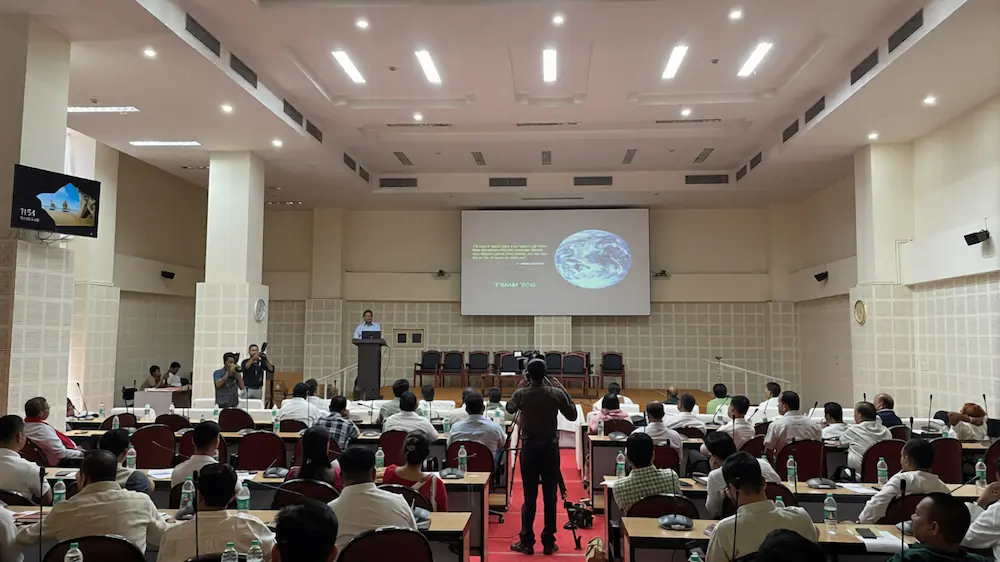
In July this year, I conducted a 60-hour, practical work-oriented internship called “Climate Justice 101: Empowering Community Leadership” for students of Bhattadev University in Assam.
The objective of the internship was empowering local youths, the majority coming from Indigenous people and local communities, to take ownership of local climate and ecological issues and find innovative solutions. Although our initial target was 60 students, we were able to accommodate 100. Each of the students were fully engaged, compiling data that is now available for further studies and suggesting replicable solutions to emissions from waste disposal, deforestation, water leakage, energy usage, and mobility.
Was there a moment when someone else stepped up or got involved because of your work?
One person I must mention is the Sahitya Academy Award-winning author and editor Anjan Sarma. We formed the Mahabahu Climate Forum, which now also has a collaboration with the Assam Climate Change Management Society.
This year we printed a unique “Climate Calendar,” which features a bird or animal photographed by me with text describing the impacts of climate change on the animal or its habitat. We have also launched Mahabahu Mirror, a printed magazine focused on climate change, environmental challenges and the Indigenous heritage of northeast India.
Looking back, what moments quietly mattered more than you realized at the time?
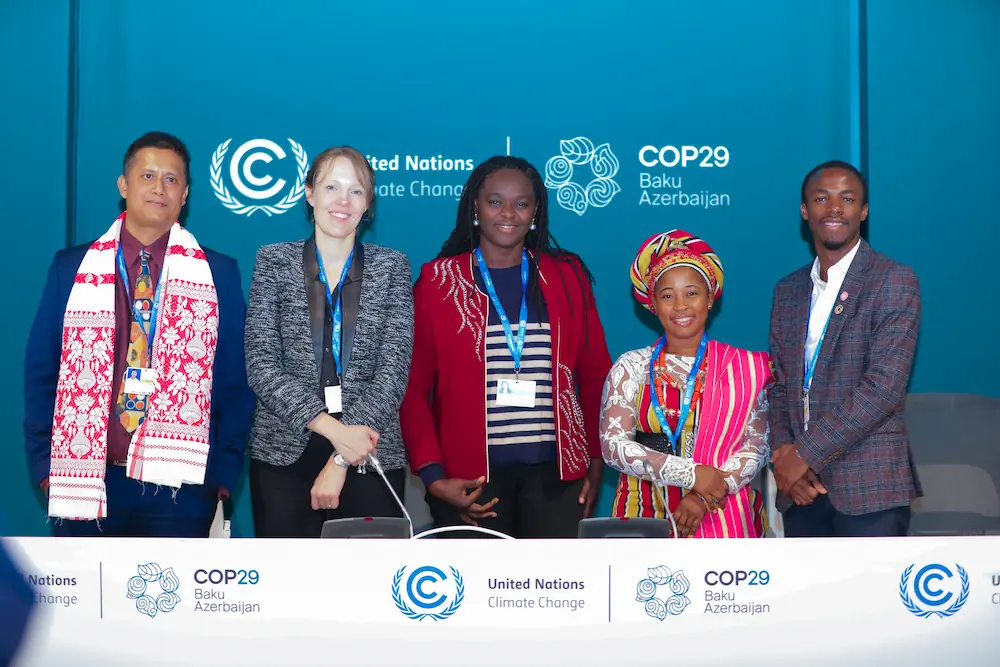
I live in Nagaon, which very few people outside of Assam are familiar with. Yet, being a Climate Reality Leader has opened doors for me that are hard to imagine, including speaking opportunities at the UN climate conferences.
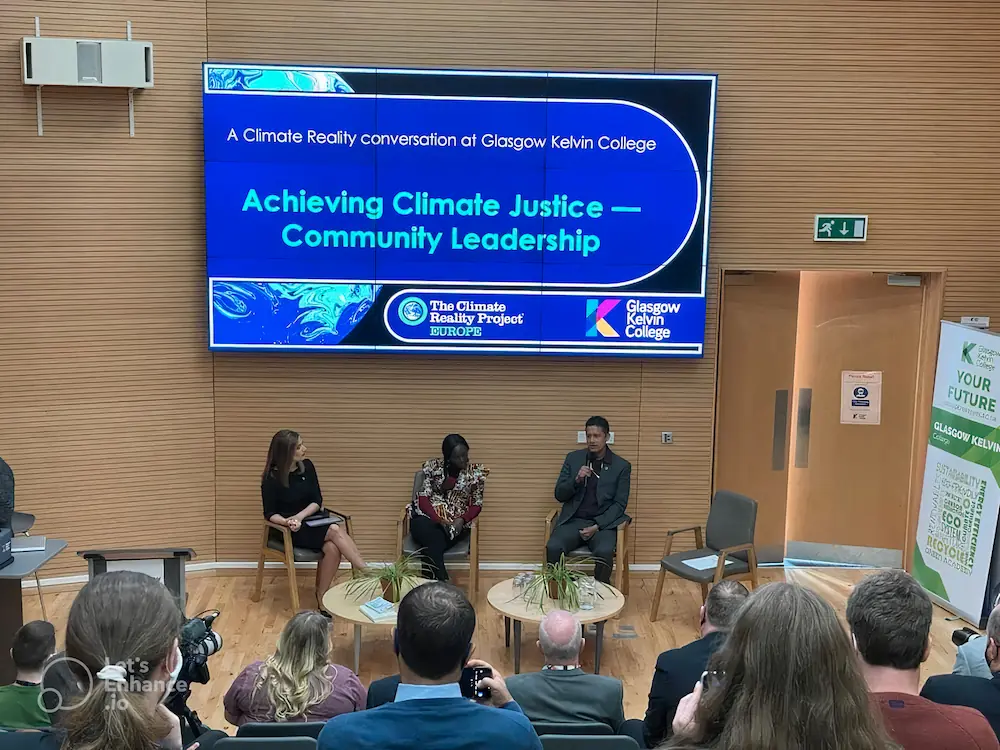
My best moments are when I am invited to speak to students in faraway lands, including the universities of Stanford, Alberta, Glasgow, Plekhanov, and Dhaka. Last year I was invited to speak during the Right Here, Right Now Global Youth Climate Summit on World Environment Day.
I have also collaborated with Climate Reality Leaders around the world. I was the speaker from Asia during the launch of the We Don’t Have Time agency. With Climate Reality Leaders from Italy, we set up the SMILY Academy to motivate the next generation of entrepreneurs to incorporate traditional Indigenous knowledge systems in their ventures.
What keeps you going?
If I were to put words to my feelings, they would be: fear, hope, and inspiration.
I am worried about the future of my daughter, my nieces and nephews, and lately, the unfolding disasters all around where I live. I feel I must continue speaking, writing, and engaging with all sections of our society, while also working to restore the salubrious environment by planting trees and protecting all forms of life.
But at the same time, I feel we should open space for widespread and inclusive research on technological interventions that would help humanity buy time, save lives, and revert ecological collapse. In this context, with the Healthy Climate Initiative, I organized the India Climate Cooling Summit to deliberate on future pathways.
I am very hopeful about Gen Z and the generations after, who have grown up amidst these climate catastrophes and know the consequences of the current trajectory of denial and economic growth. Having seen how the youth have built enterprise and changed governments, I feel the time for systemic global transformation is not too far.