
Embed Code
Shirley Barnea
"They Are Absolutely Not Listening": Why Shirley Barnea is Suing the Canadian Government
 Solutions
CLIMATE REALITY LEADER Trained: New York, 2024
Shirley Barnea
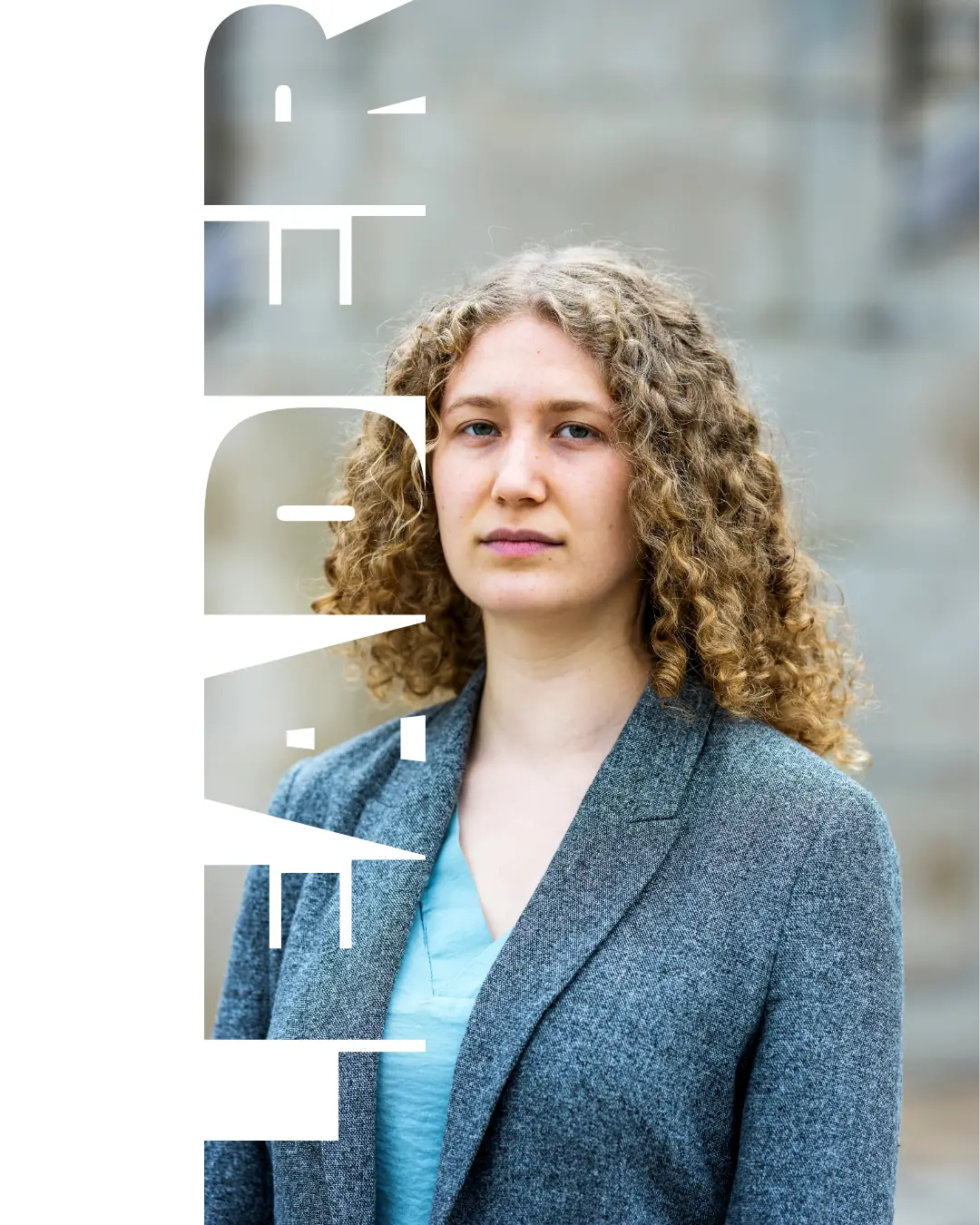
Shirley Barnea isn’t your average University of Montreal student. While studying economics and political science, she’s also a certified Climate Reality Leader, a veteran protest organizer, and now – one of three youth litigants taking the Canadian federal government to court.
By Ashley Anthony
Let’s start at the beginning. How did you go from being a kid who loves nature to organizing massive climate marches and suing the government?
I always like to start with just being a nature kid – climbing trees, going camping, and feeling that deep connection to nature. When an ecosystem collapses, that’s not an abstract thing. That’s a living space I care about.
In grade five, I joined my school’s Green Team mostly because my friends did, but through that, I learned about the climate crisis. By high school, when Greta Thunberg’s Fridays for Future movement took off, my friends and I lobbied our principal to close the school for the September 2019 march. Standing in that crowd of half a million people in Montreal – the largest environmental protest in Canada’s history – was a huge turning point. I felt that energy of: We are actually super powerful together. From there, I joined the core organizers, helping plan weekly strikes and massive coalition marches. It’s basically become my identity!
You’ve been yelling at governments through microphones for years. Why turn to the courts now?
In all my past actions, I was yelling at the government in the hope that they would listen. Turning to a lawsuit is an admission that they are absolutely not listening.
Under previous leadership, progress was slow, but you could feel the movement having an impact on policy. Now, under Prime Minister Carney, it feels like they’re taking a wrecking ball to that progress and that our demands are falling on deaf ears. Protests are still crucial for keeping media and public attention on the issue, but taking legal action feels like the only tool left to force them to take responsibility.
We’re acting as "public interest litigants." We aren't asking for money or compensation. We're asking the court to force the government to protect all Canadians.
Walk us through the lawsuit. What are the brass tacks of the case?
Basically, Canada no longer has a credible plan to meet our 2030 climate target, and that’s illegal under a law called the Canadian Net-Zero Emissions Accountability Act (CANZEA).
Historically, Canada has set target after target since 1990 and missed every single one. CANZEA was passed in 2021 to stop that pattern. Under this law, the Ministry of Environment is legally required to set targets, produce a plan showing how we’ll reach those targets, and report on progress.
In 2022, an emissions reduction plan was put forward that put us on track for a 40% reduction by 2030. But under Carney, key measures have been canceled or severely weakened. Their own mandatory reporting from December 2025 showed we’re now only on track for 20%.
On paper, they pretend it’s the same plan, but in practice, they scrapped the guts of it. By doing this quietly instead of officially amending the plan, they bypassed legally required consultations with Indigenous peoples, the Net-Zero Advisory Body, and the public. We are asking the court to order the government to initiate an official amendment process and produce a legitimate plan that actually meets the 2030 target.
Who are you teaming up with on this?
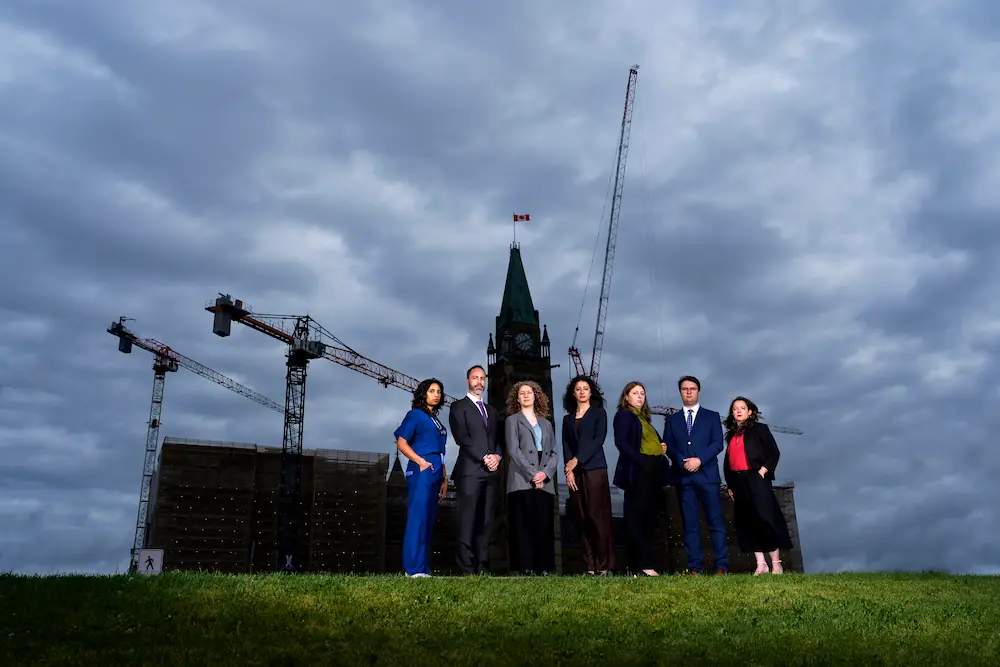
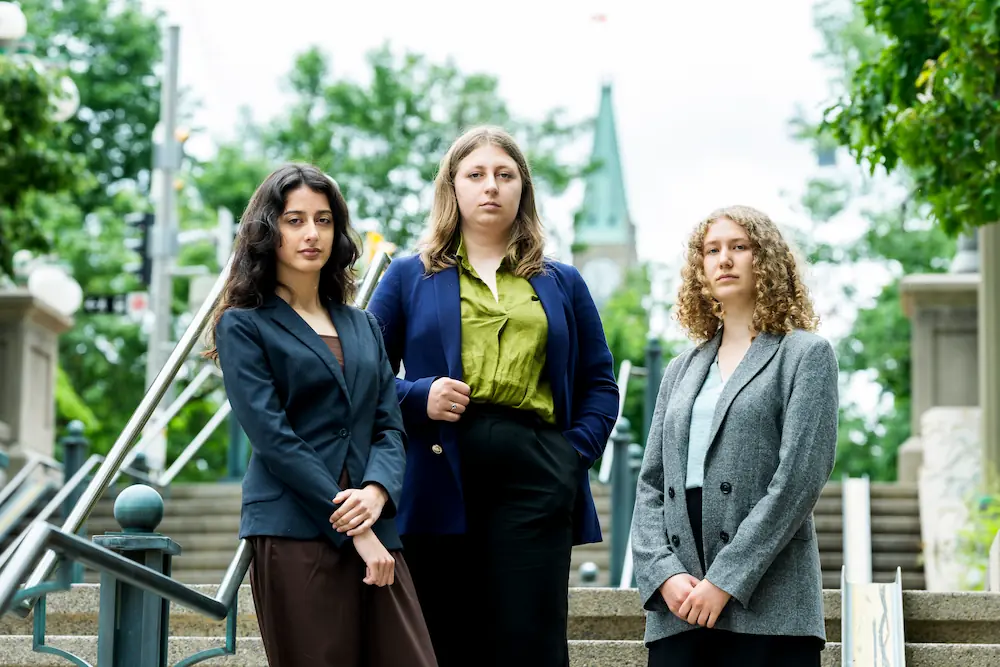
There are three youth litigants: myself, Marie Maltais from Quebec City, and Sophia Mathur from Sudbury – who has actually been involved in another charter lawsuit against Ontario since she was 12! We’re joined by two major organizations: Environmental Defence Canada and the Canadian Association of Physicians for the Environment (CAPE). The amazing lawyers at Ecojustice are representing us for free.
We’re acting as "public interest litigants." We aren't asking for money or compensation. We're asking the court to force the government to protect all Canadians.
I hope people are inspired to take action in their own lives – whether that’s launching a lawsuit, pushing for change at city council, or just staying engaged.
Climate lawsuits can take years. How does this case differ from others we’ve seen in the news?
Broad cases – like the La Rose case, which started six years ago when the applicants were little kids – are based on the Charter of Rights and Freedoms. Those ask the courts to make very broad rulings about rights violations, which takes a long time.
Our case is an application for judicial review. Because we already have CANZEA on the books, we aren't asking the court to interpret broad rights. We're simply saying: There is a law. The government is breaking it. Please order them to follow it. Because it’s simpler, we’re hoping for a much faster timeline, potentially getting a court date by early 2027.
How did it feel stepping up to do a national press conference about this?
It was kind of surreal! I don't get nervous for regular interviews anymore, but standing in the Parliament building ready to launch a press conference was terrifying. I still haven't completely wrapped my head around the fact that I'm suing my own government. It feels extreme, but I feel honored to be doing it.
Beyond suing the government, what’s next for you?
Long-term, climate justice has to be a part of my career. I’d love to go into politics, though knowing myself, I might get frustrated inside the room and want to go back outside so I can yell through a microphone again.
What do you hope people take away from reading about your story?
I hope people are inspired to take action in their own lives – whether that’s launching a lawsuit, pushing for change at city council, or just staying engaged.
Social movements and legal action go hand in hand. Mobilization is what got CANZEA passed in the first place, and now that law gives us the tool to hold them accountable.
Photos credited to Justin Tang.