
Embed Code
Zal Dastur
"I could help them understand that, if you want to make sure that your product is the one that's chosen – because your product is the better product for the planet – you have to be able to convince an investor or a corporate that it’s the right thing for them to do as well."
 Solutions
CLIMATE REALITY LEADER Trained: 2021 Global Training
Zal Dastur
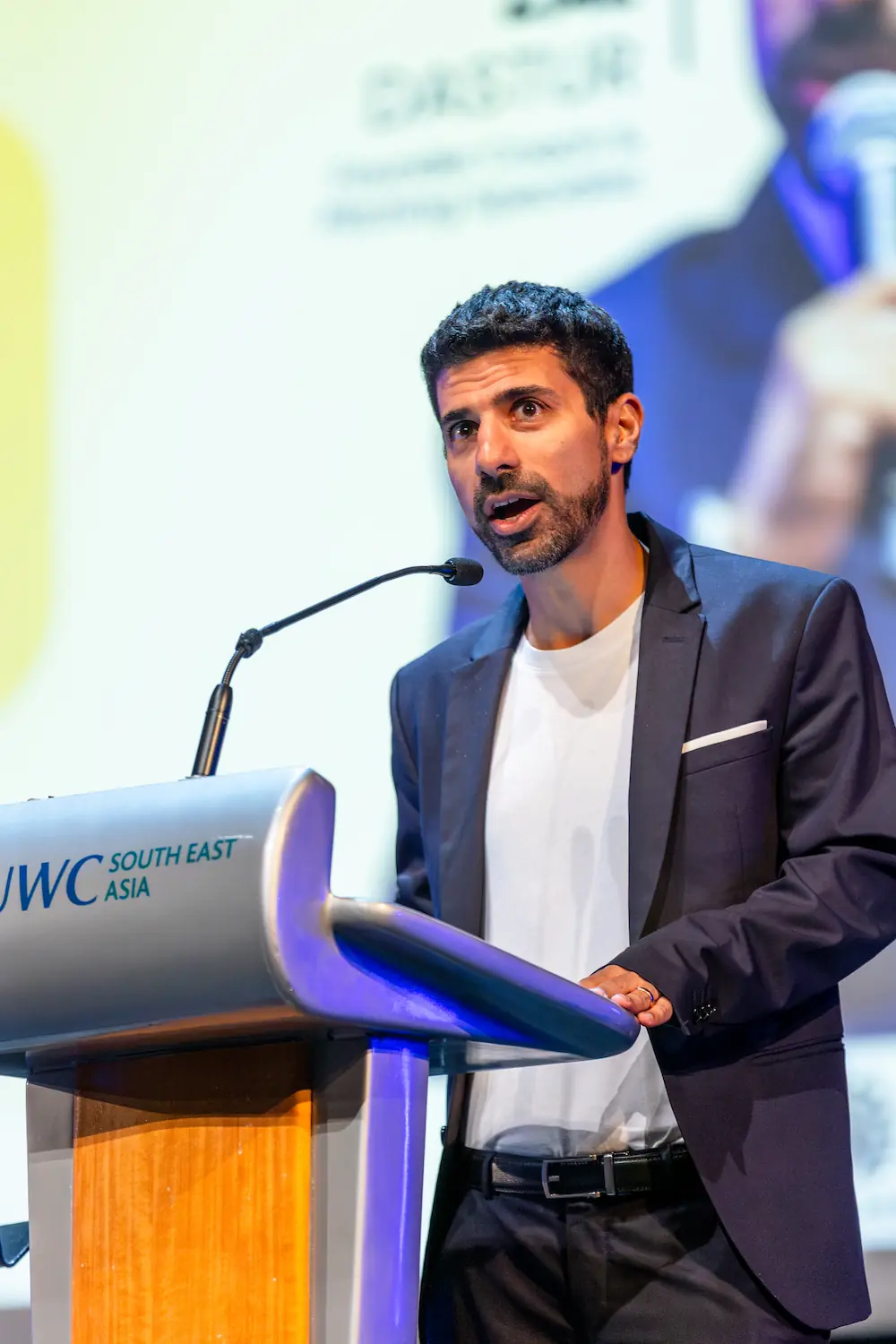
With a rare talent for storytelling and persuasion, Singapore-based entrepreneur and founder coach Zal Dastur has become a go-to advisor for climate companies looking to enter new markets and grow their audiences across Southeast Asia. Along the way, he’s learned how companies can turn climate commitments into business success and launched the "Impact at Scale" podcast to tell the story of leaders doing just that.

What brought you to climate in the first place?
The school that I went to, United World College of Southeast Asia, was very instrumental in shaping my idea that we were here as stewards of the planet. As a child, I was always running around, turning the lights off in rooms, turning off the hot water heaters, telling my parents that we needed to print on both sides of the paper.
It's hard to say when it became personal. It was always something that mattered to me, the planet that we live on.
You’ve founded, mentored, and worked with a huge range of startups, tech companies, VC firms and more. How did you start bringing climate into your business work?
A little bit after COVID, I felt that those who care enough about the planet should be doing something about it.
When I sat down and thought about what I could do, I realized that I wasn't going to invent a new energy source or be able to lobby politicians. But what I could do is use my superpower, which was in sales and persuasion, and help people sell and promote their product better.
I realized most climate founders typically fell into two groups. Academics, scientists, or engineers – or they viewed themselves as an eco-warrior, raging against the system. With both of these groups when you put them in front of either investors or corporate B2B customers, they struggle to convince and persuade them to invest or buy.
This is where I thought I could bring my skills and knowledge that I developed over 18 years of building companies. I could help them understand that, if you want to make sure that your product is the one that's chosen – because your product is the better product for the planet – you have to be able to convince an investor or a corporate that it’s the right thing for them to do as well.
When you talk to businesses about climate and sustainability and it means changing some significant part of their operations or work, how do you get them to yes?
The most important thing to talk about is how it helps them. How does it lower their cost? How does it make the company more efficient? How does it create better opportunities for them to do business?
It's about understanding what's important to that business. More than the business, it's understanding the person that is sitting across the table from you. What is their KPI? How are they going to be deemed as a success? How can we help them to get there?
I heard the Dalai Lama say something – and I'm probably butchering this – but he said something like 20 years ago, nobody was talking about the environment. At least now there is a conversation. And even if 50–60% of what we see is all greenwashing, then 40–50% is not. The fact that people are even having a conversation means that we’re moving in the right direction for climate change.
Everybody cares about their children. Everybody cares about the community they live in. You are the person that wants them to make a change. You've got to find common ground. Find how you can meet them halfway in that space. That's what's really going to connect with people because climate change is so big and it's so vast that it is easy to feel you are too small to make a difference.
You’ve talked to over 100 business, thought, and movement leaders for your podcast, Impact at Scale. What do you see as the major challenges for companies and business leaders looking to make an impact on climate?
The major challenge is that the externality of climate change is not priced into products. Put simply it is easier to be profitable by not paying attention to the damage you are doing, than it is to do things better. We need to find a way to make doing good be profitable for business.
Take solar as an example. Solar is incredible, but it's only incredible once the price crossed a particular threshold where it became economically viable and profitable to use. Then there was no need to argue if it was a good idea or not. People were just deploying it because it made economic sense.
The common characteristic I see in leaders who truly are making an impact in this area is perseverance. The positive thing that I see is that every single aspect of industry in the world that we live in – whether that's transport, food, water, construction, energy – all of it has to be reimagined in a different way that is more sustainable and works better with the climate.
What is very inspirational is there are so many committed people out there doing wonderful things. Every time I get disheartened, I see the innovation that is taking place all over the world and so many people trying to make a difference.
Look at the way that we’re moving into green energy and renewables. Look at what's happening now with the Iran war and the Straits of Hormuz, and the fact that your energy supply is being cut off because of a war that was started by a politician who has nothing to do with their country. That’s making people, and more importantly governments rethink their energy policy.
Change is always tough at the beginning, messy in the middle, and beautiful at the end. And right now we are in the very, very messy middle. Two systems: A system that wants to emerge and the system that has existed for so long are struggling and fighting. The system that existed for so long is losing and it is fighting back. The question is how quickly that loss will happen and whether it’s soon enough. But it is losing.

There’s a lot of innovating thinking and energy for new approaches to finance and clean technologies we’re seeing in Singapore and Southeast Asia right now. What do you think is driving this?
The conflict in the Middle East has made a lot of people see how fragile the systems are, how easily they can be disrupted, and how quickly things can change.
Climate awareness in Singapore, and I would say Southeast Asia, it's certainly growing. Is it where it needs to be? Not at all, but it is growing.
Singapore in particular has the highest trust of the government anywhere in the world. The government has released a green plan, and so as a result, companies and people are going along with it.
But it is hard. The story and the analogy that I use often is that everybody in Asia, literally from Japan to Turkey, is one generation away from knowing someone that didn't have enough to eat. So your body and mind is only really focused on short-term survival versus dealing with a large complex global problem.
There's a lot of work that's being done now in schools, which is amazing. You certainly do see children caring. I think that where other nations and regions can learn is that Singapore is setting a path and they are setting regulation. They’re removing internal combustion cars. They're the first country in Southeast Asia that's got a carbon tax. So they are using legislation to force changes rather than just leaving it up to the businesses to decide.
Everybody cares about their children. Everybody cares about the community they live in. You are the person that wants them to make a change. You've got to find common ground. Find how you can meet them halfway in that space.
What has surprised you most in your work on climate?
The thing that has surprised me the most is that there are a lot of people out there that care. Every day, there are more and more people making a difference and making choices that are good for the planet.
The big problem is that somehow we went from “Climate change doesn't exist” to “We can't do anything about it” without trying to fix it in the middle. The problem does not sit in the front of enough people’s minds. Change is difficult and requires a lot of momentum that must come from people who care.
Being committed to something and seeing a bigger picture and trying to be a part of a bigger community, that definitely feels motivating. It's extremely rewarding to work with founders that are making a change and people that are out there on the ground trying to make a difference. These are the people that surprise and motivate me the most.
What's next?
I just want to work with as many companies as I can. I'm still someone that tries to talk about climate as much as I can. I'm someone that tries to spread a message. I'm trying to make people more aware. I'm trying to make people that are in positions to do something be more aware and make them understand that it's not about them. It's about their kids. It's about everybody in their world.
I'm just excited to keep growing. I had no idea I would be speaking on stage with the former Vice President Al Gore six months ago. So, who knows where I will be next?

Think back to the version of you before you got involved. What would you say to yourself?
I would say to get more involved. I would say that there is certainly more that I could do. What I wish I'd known before I started was that I could have started this a long time ago. I didn't have to wait. I could have just been doing this on the side or I could have been helping. When you look for help and when you look to bring value, there's so many people that care and so many people that want to make a difference.
What would you say to someone who says “There’s nothing I can do”?
To somebody who says there's nothing I can do to make a difference, I would say vote. Think about where you invest your money. Be aware of what is going on around you. The only way things change is when people want it to change. And what we will start to see are companies that can be successful doing a good job and helping the planet. They would only be able to exist because people decided that this is the world they want to see.
We are surrounded by people and particularly oil companies that are trying to convince us that we can't do anything about climate change. But the reality is that there is so much we can do about it and so much that is already being done.
The power really does reside in the 7 billion people on the planet. They get to choose how they spend the money that they earn. They can use that money to make better choices for the planet. Where you spend your money is a vote of how you want to see the world. So people should be more aware and careful of where they spend it.
Everybody can make a difference and, and that's what we'll see. We are all humans and we live on this planet together with the planet. Once we start seeing ourselves as part of the planet instead of separate from it, I think there will be a huge change.
