
Intro Copy

Two Questions at Climate Week
Date
Key Takeaways
- Facing unprecedented opposition from the administration, Climate Week NYC saw the movement asking: Where do we go from here?
- For all the administration's opposition, the clean energy transition is moving forward.
- Clean energy is cheap energy and growing fast, providing 93% of new power installed in 2024.
- A new report outlines clean energy's three superpowers projected to push fossil fuels into terminal decline by 2030.
- Former Vice President Al Gore hosted a special Climate Week event to explore how leaders can seize this momentum and build the political will for climate action.
Billed as “the largest annual climate event of its kind,” Climate Week NYC is the biggest climate gathering outside of UN COP summits, cramming some 900 panels, presentations, and other events into seven days spread across the city’s five boroughs.
Beyond the media spectacle and pitch decks, the week is a chance to unscientifically take the temperature on climate action and clean energy, both in the US and globally.
Taking place in parallel with the UN’s climate summit – which this year served as an unofficial second-chance deadline for new national climate plans ahead of COP 30 in Brazil – Climate Week NYC is also often where the conversation starts focusing on the big-picture questions for COP. Where we are. How far we need to go.
Officially, the theme of this year’s event was an assertive “Power on.” Unofficially, it was much closer to a question: Where do we go from here?
After all, you don’t need a headline to tell you the past eight months have been absolutely brutal for the climate movement. Especially in the US.
Relentless attacks on clean energy and climate action and science by the new administration literally from Day One. A swaggering fossil fuel industry repackaging do-nothing climate denial as “energy realism” and executives boasting that you’re more likely to see Elvis than see the energy transition succeed Years and countless hours of public pressure campaigns, policy analysis, legislative wrangling, and more to finally pass the biggest investment in clean energy and climate action the world has ever seen (aka, the Inflation Reduction Act) largely undone by one presidential pen stroke on one hideous budget bill in July.
So where do we go from here?
Especially because it's not just the political will for climate action that’s slipped away. Prestige think pieces and polling now say the same thing: Americans don’t want to hear about climate right now. No wonder, perhaps, with millions grappling with a cost of living crisis, that in a recent Yale survey of top public worries in the US, climate doesn’t even crack the top five. Not even for “the concerned” on climate segment.
None of this, though, has shifted nature’s position. Even as Trump labels climate change a “con job” in front of the UN, warming continues to accelerate.
You don’t have to look far to see what this means. Witness the recent rapid intensification of Hurricane Humberto from a Category 1 to full Category 5 house-smashing, life-changing strength with 160mph-plus winds. All within 24 hours. While the storm ultimately spent its fury heading east into the Atlantic instead of smashing into the Eastern Seaboard, this is a bullet momentarily dodged, not a crisis finally averted. Odds are, we’ll see more of its kind.
LOOKING FOR HOPE? LOOK AT THE ENERGY TRANSITION
For all the real political challenges and the media hand-wringing, the fundamentals of the clean energy transition have – outside of the US, at least – never been better.
There’s a reason “Clean energy is cheap energy” is fast becoming the climate movement’s catchphrase. Not only is clean energy increasingly the cheapest form of new power almost everywhere, but it’s the fastest-growing source too, with a staggering 93% of the new electricity capacity last year coming from renewables.
Put aside the fossil press releases and look underneath the hood of global energy systems and there is a clear sense of a snowball beginning to roll down a mountainside. A new report from UK thinktank Ember, “The Electrotech Revolution,” spells out the how and why.
Per Ember, electrotech – roughly, renewables, battery storage, and electric technologies – has three built-in superpowers that give it a market-winning edge over climate changing-fossil:
- Efficiency: Electrotech is three times more efficient than fossil energy, with the sun alone offering 100 times more energy potential than fossil fuels.
- Cost to Scale: Fossil fuels get more expensive as extraction continues and existing source dry up. Clean energy meanwhile keeps getting cheaper, with costs falling 20% every time deployment doubles. Clean energy is cheap energy.
- Energy Independence and Security: Clean energy is a technology you buy once. Fossil fuels are a commodity you keep paying to resupply. In a world where 92% of countries have 10 times the renewable potential necessary to meet their current demand, this creates a path to true energy independence.
Together, these three factors lead to a conclusion as inevitable as gravity: “Electrotech is set to push fossil fuels into terminal decline by 2030.”
Needless to say, this is very, very good news. But the pace of this decline matters immensely. Turning this momentum, however, into on-the-ground progress quickly enough to avert the worst of climate change requires a kind of leadership now in short supply. At least at the highest levels.
THE SECOND BIG QUESTION: WHO WILL LEAD?
The challenge now is to change that.
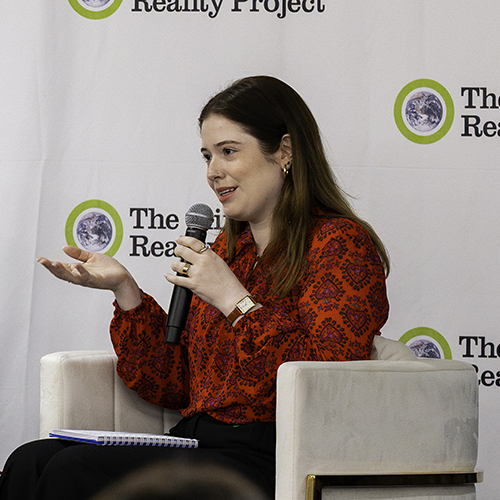
As Climate Reality CEO Phyllis Cuttino put it, kicking off “Who Will Lead?”, a special Climate Week event with former Vice President Al Gore on September 24: “Our job as civil society and climate leaders is to encourage the leadership we want and that the climate crisis demands.”
Speaking with government leaders – Rachel Kyte, UK special representative for climate and Tina Stege, Marshall Islands climate envoy – and youth activists – Lily Morse, head of the Green Schools Campaign, and Vittoria Horch, project management director with Brazil’s EmpoderaClima – Vice President Gore used the event to explore what climate leadership means today and how we move forward in these challenging times.
For anyone concerned about the future of climate action in 2025, the two panels offered plenty of reason to believe that the movement obituaries may be premature. Six ideas in particular stood out.
Fossil fuel companies are actively holding back progress and political leaders are afraid to take them on. That’s where we come in.
“[P]olitical leaders around the world are frightened of the political and economic lobbying power of these fossil fuel companies . . . They have so much power and so much control. And now, the only way to accelerate the progress we need to solve this is to have the pressure coming from the grassroots up, because too many of the leaders have been compromised and controlled and captured. But the people ultimately have the say.”
– Vice President Al Gore
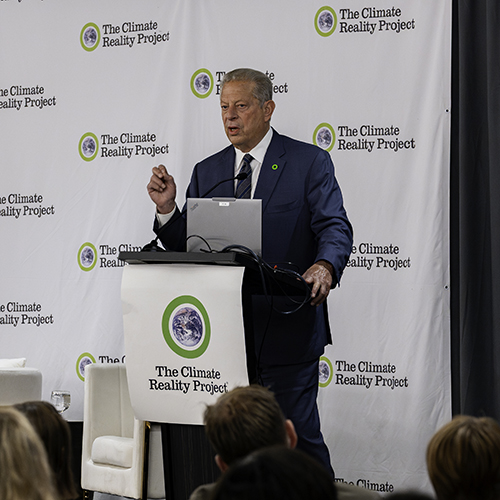
Momentum for clean energy transition is on our side – the only question is how fast it happens.
“What I see is a big wheel turning in the right direction. And inside that big wheel, there are little wheels turning in the wrong direction. But they, too, are being moved tectonically, you could say, in the right direction. We are going to win this struggle. We are going to be successful. The remaining question is whether or not we will win it in time to avoid the terrible, negative tipping points that are out there.”
– Vice President Al Gore
US withdrawal from the Paris Agreement is not the end of international cooperation on climate. Far from it.
“Climate math, okay? One hundred and ninety-five – that's the countries that signed or ratified the Paris Agreement – minus one is 194. Not zero. And multilateralism is being pulled out, from all directions, right? There's plenty of people that would seek to undermine, to threaten the Paris Agreement. But 194 countries are showing up in Belém to keep the show on the road . . . So the United States may have decided to absent itself yet again. But the show is surely moving forward, and some of the implementation pathways are actually going a breakneck speed.”
– Rachel Kyte, special representative for climate, United Kingdom
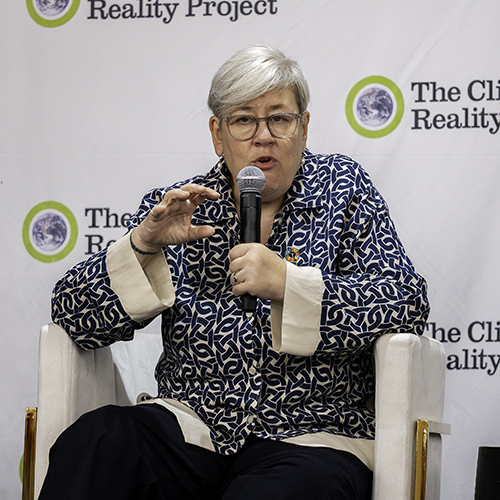
Successful energy transition depends on all nations having access to the latest clean technologies.
“For a small country like like mine, that access to technology is going to be the real issue. Wherever it's made is whether we can access it. And that, you know, for major economies, for the large countries, this is less of an issue for it but for the small countries, we often end up as dumping ground for the old technologies, to be honest. . . We want to be able to access that technology. We need, the newest in battery storage. We need the newest, in solar panels. And that access is not always there, and that’s an equity issue.”
- Tina Stege, climate envoy, Republic of the Marshall Islands
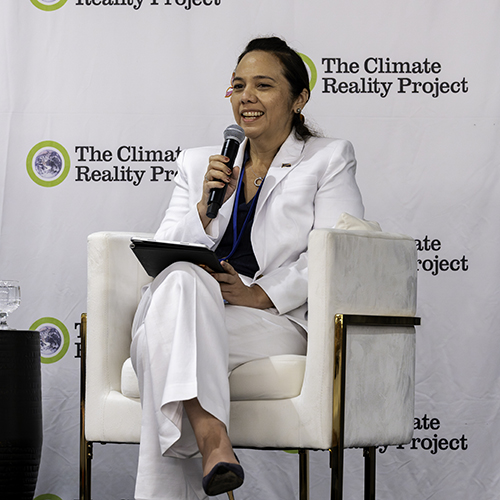
For youth activists, climate action isn’t just an antidote to climate despair – it’s an opportunity to build a better world.
“I felt really angry about the climate crisis, that, like, the leaders of today and like, yesterday had put us in a situation where, like, it was our burden to, like figure this all out. That really made me angry. And I ended up reading this book called “All that We Can Save” that ended up really kind of shifting my perspective. One of the essays was about, instead of being kind of angry and feeling the burden of the climate crisis, and needing to fix it today as a young person, seeing it as, like an opportunity to shape a world of tomorrow. Kind of like, we are at this massive turning point where all of this stuff is going to change, and we have the opportunity to kind of like shape that future and build that future that we imagine as young people today.”
– Lily Morse, co-founder and head, Green Schools Campaign
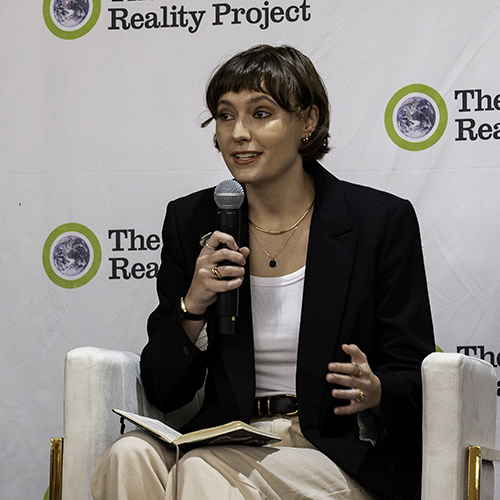
Young people have a critical role and a powerful contribution to make, if given the support.
“The unique role of youth is that we are turning our experiences into solutions. I think everybody calls us the future leaders of the next generation. But I think right now, we are the protagonists of this decade. We are the ones that are gonna face the hardest impacts of climate change in the future and are facing now because we know that climate change is happening. . . We bring courage. We bring innovation. We bring urgency. Because we are being affected as well, but we're not being heard.”
– Vittoria Horch, Project management director, EmpoderaClima
READ MORE
-
 September 25, 2025
Why Clean Energy Is Cheap Energy
-
 September 17, 2025
How the Climate Crisis is Impacting Fall
-
 September 4, 2025
A Big Win for Clean Energy in the Sunshine State


