
Intro Copy

Looking Beyond Fossil Fuels in Santa Marta
Date
“How do we get to a world without fossil fuels?”
That, in a nutshell, was the core question representatives for 57 nations gathered in Santa Marta, Colombia last week for the First International Conference on the Transition Away from Fossil Fuels (the “Santa Marta conference”).
The question couldn't be more timely. With conflict in the Middle East choking oil and gas flows and energy and commodity prices soaring, countries everywhere are looking for an escape route from fossil fuels. Santa Marta was a chance to point the way.
What made Santa Marta quietly revolutionary was that it was the first international climate and energy summit of this scale and scope to take place completely outside the umbrella of the UN COP process that has steered global climate efforts for decades.
Being outside the COP process meant that organizers – Colombia and the Netherlands – were free to only invite nations actually willing to support energy transition. Critically, it also meant that none of the petrostates or fossil fuel lobbyists that sunk efforts to get a fossil fuel transition roadmap at COP 30 last November were there to get in the way.
The result was nothing short of magical. For once at an international climate summit, everyone was talking openly about fossil fuels and the practical challenges of phasing them out. Not if we should, but how to do it quickly and fairly. All without petrostates and lobbyists throwing up roadblocks every step of the way.
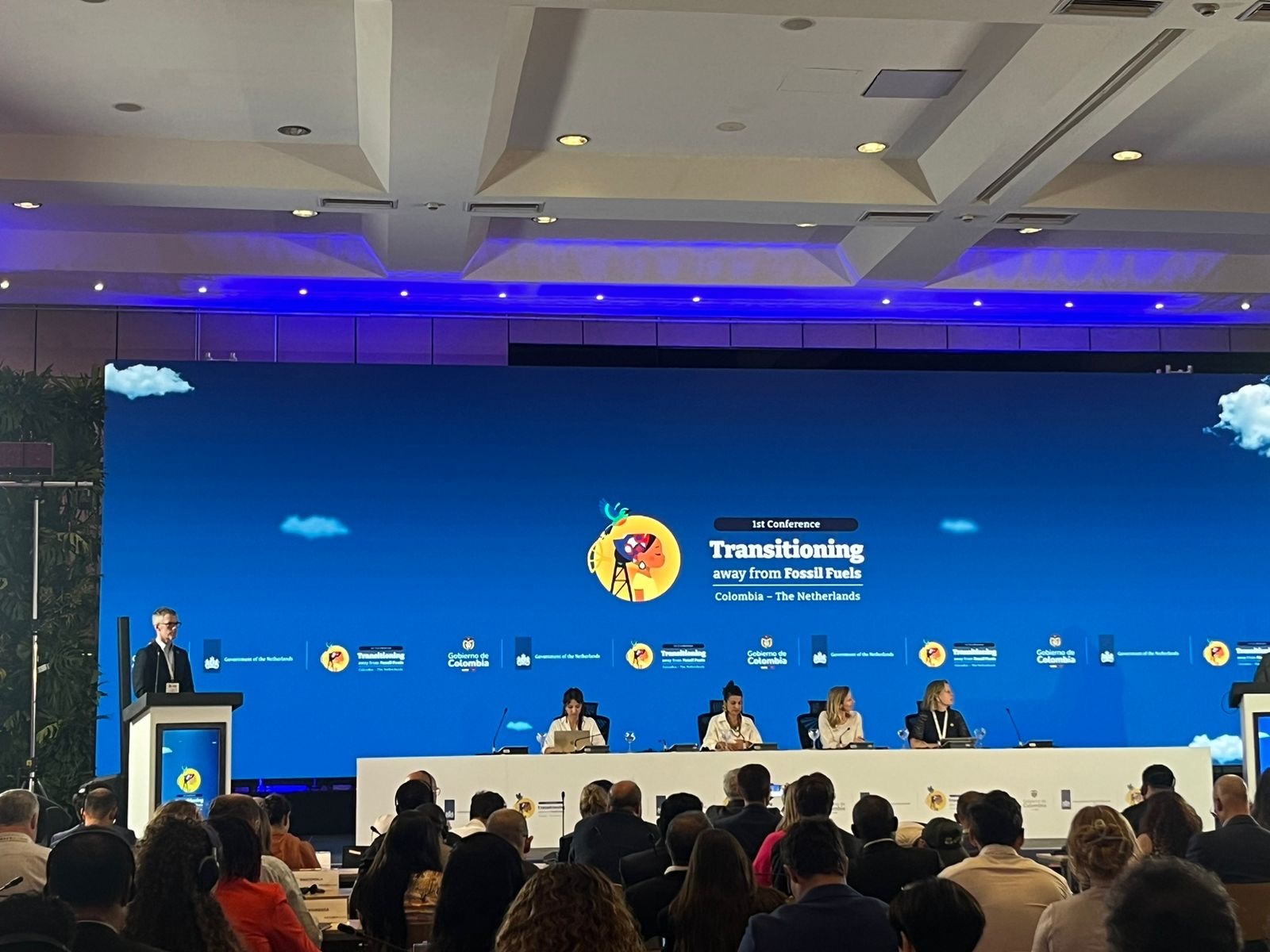
This freedom also brought the freedom to rethink the actual process of negotiations.
Rather than the formal settings, closed doors, and separation between delegates and civil society familiar to anyone who’s attended COP, Santa Marta had national delegates sitting next to representatives of all sectors and, well, talking to each other. While not without its own limitations, the format encouraged real listening and collaboration and meant talks could focus deliberately on implementing existing commitments, rather than negotiating new ones.
The feelings on the ground reflected a sense of relief and determination spawned by the format. Government delegates described it as “refreshing”, “highly successful” and “groundbreaking.” One of the co-chairs described it as a “safe space” for dialogue.
Panama’s special representative on climate change, Juan Carlos Monterrey Gómez said, “[A]s the workshop started, I realized there were ministers, envoys, civil society leaders and Indigenous people. They put us in a format where we could not open our computers, so we had to speak from our minds and our hearts. That completely flipped my perception. That kind of space I haven’t seen in my 10-year history with the UNFCCC.”
A big part of this new space came down to how civil society was an active partner for much of the conference, though not everything came without hiccups. A confusing accreditation process and limited visas for Asian and African delegates restricted access for the high-level segments. But as Climate Reality Canada’s Elizabeth Fournier recounted:
“Even with these constraints, civil society was able to engage directly alongside country delegates at key moments - unlike at COPs, where interventions often come too late to shape outcomes - and by the closing plenary, something rare was palpable: People were smiling, hopeful, and genuinely energized.”
The good vibes would matter less if the conference didn’t also deliver real world results. The good news is that Santa Marta delivered in five key areas.
1. Consensus on fossil fuel dependence
Unsurprisingly, the global energy crisis unleashed by the war in the Middle East was the not-so-subtle subtext of nearly every conversation in Santa Marta. What should offer hope for a world struggling with soaring prices and crippling energy shortages was how the dangers of fossil fuel dependence have gone from climate talking point to high-level consensus.
As Dutch climate minister Stientje van Veldhoven said, “Price volatility and dependence on imports are structurally and unacceptably impacting our economies. We need to move away from fossil fuels not only because it is good for the climate, but because it strengthens our energy security. Investment in clean energy also lays the foundation for a more resilient and sustainable economy, capable of mitigating these shocks.”
2. Major economies leading by example
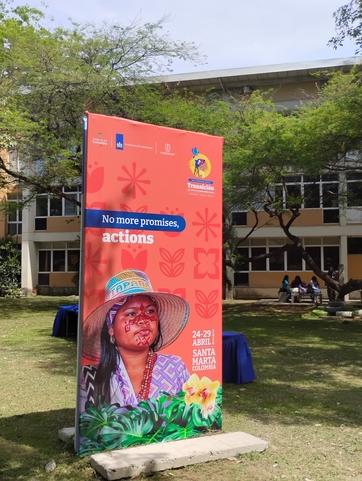
Consensus is one thing. Practical action is another. Which is why it was so critical that France upped the ante from the start, presenting a new national roadmap for fossil fuel transition. Coming from a major European economy, the challenge to the rest of the world was clear: We’re doing this. You can too.
One of the biggest challenges discussions took on was the $7.4 trillion in annual fossil fuel subsidies (as of 2024) sending taxpayer funds to the companies currently making $30 million an hour in profits on the back of the current conflict. As part of the conference, participating countries are invited to create a process for identifying and reporting these subsidies as the first step toward reform.
Although many of the largest fossil fuel producers and emitters weren’t invited, several did attend, including Australia, Canada, and Nigeria. And they came ready to engage.
Nigerian regional development minister Abubakar Momoh made the stakes clear: “Nigeria is actively diversifying its economy away from extracting oil, which accounts for around 80% of our exports. Nigeria strongly believes that it is not whether extraction should decline, but how to organize it so it is manageable, fair and politically viable across countries.”
Now it’ll be up to the next conference in 2027, co-led by Ireland and host nation Tuvalu, to build on this.
The conference outcomes highlight COFFIS, a coalition of countries working together to phase out fossil fuel subsidies. Tell COFFIS members now to submit the inventories and phase out plans they promised.
3. A vision of real leadership
France wasn’t the only country stepping up to the plate. Co-host Colombia was also there to show what leadership looks like, as a nation where 10% of GDP and 45% of exports come from fossil fuel production working on a plan to phase out domestic fossil fuel use. That’s putting real money where your mouth is.
Equally critical: The absence of fossil fuel representatives, a breath of fresh air after COP 30 hosted over 1,600 fossil fuel lobbyists. The conference – while not without its share of logistical challenges and limitations – also gave scientists and civil society prominent roles throughout. (Future COP presidencies should take note.)
More on that below.
4. Centering science
With populist leaders labeling climate change “a socialist lie” and the head of the US Environmental Protection Agency boasting of “driving a dagger straight into the heart of the climate change religion,” you could be forgiven for wondering if climate science has a role in policy in 2026.
Santa Marta had a clear answer, beginning with a conference before the conference bringing academics and scientists together to create the “Science Panel for Global Energy Transition.” The goal here was simple: Make experts available and put the power of scientific analysis and evidence-based solutions in the hands of governments serious about energy transition.
The theme continued throughout, with an opening session giving leading scientists a prominent platform to lay out the stakes of the talks and the consequences of inaction. Again, future COP presidencies should take note.
5. Real roles for Indigenous communities and civil society
One of the most refreshing features of the Santa Marta conference was the recognition that transition involves everyone and to do it right, policymakers must listen to everyone.
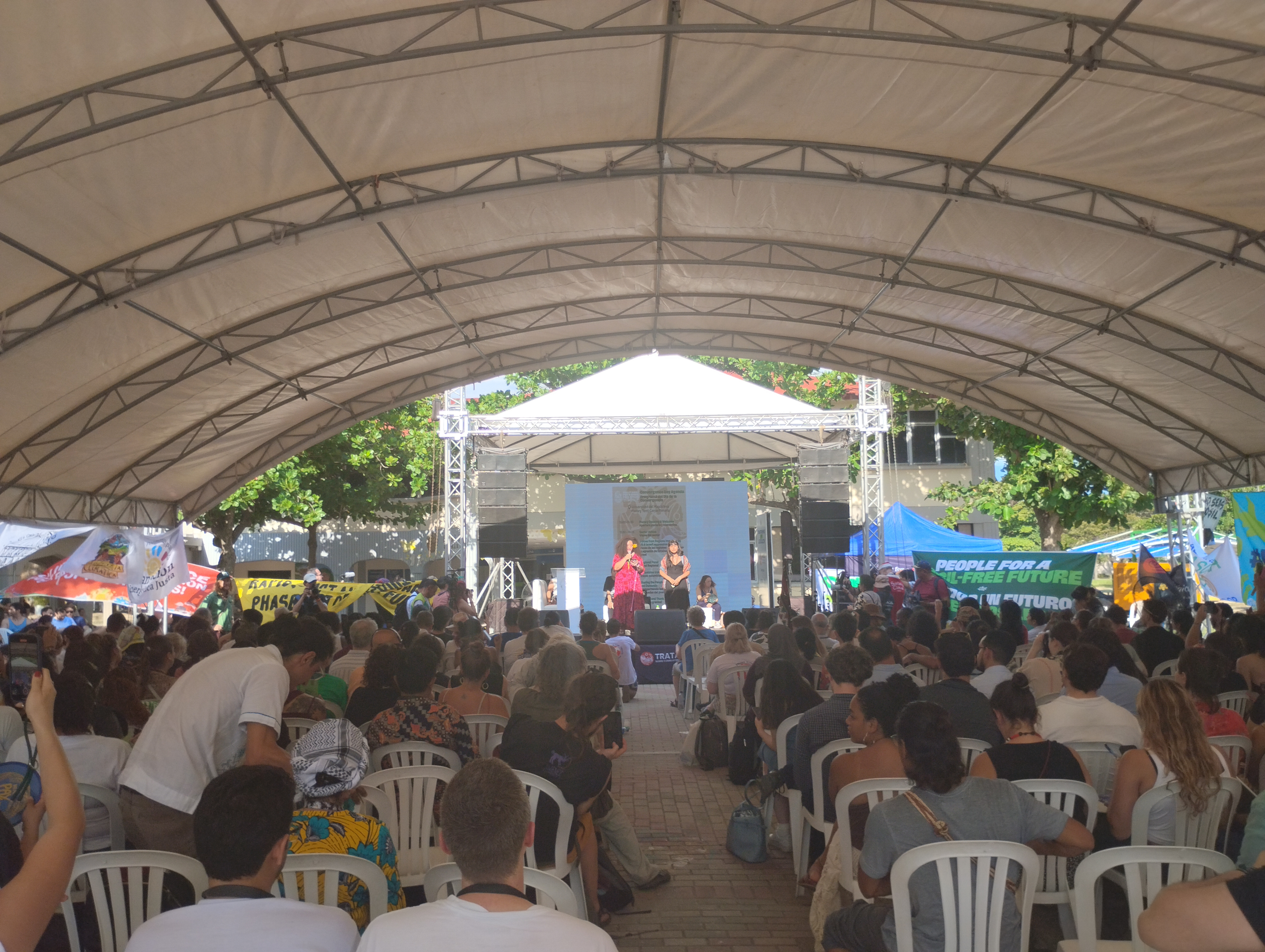
This recognition was built into the summit, with invitations to civil society to make final, consolidated inputs through an organized Peoples Assembly and other pre-conference convenings. Representatives from several constituencies also spoke at the opening and closing plenaries and were included in private roundtable discussions.
Climate Reality participated in all three stages, calling on governments to phase out fossil fuel subsidies, end the misclassification of fossil gas as a transition fuel, and enlightened multilateral leadership.
What now?
With a growing consensus that war in the Middle East has transformed the global energy sector and more and more countries recognizing they can no longer depend on unreliable fossil fuels, Santa Marta showed there is a way forward.
Next year’s conference in Tuvalu will be critical for keeping the momentum going and bringing more countries inside the tent. These conferences won’t replace the COP process, with its established legal standing and near-global participation, but they can show the world that transition works and spur real action at the larger summits.
If nothing else, what Santa Marta showed is that a significant number of countries are moving beyond statements about the dangers of fossil fuels and getting to work on alternatives. That is, transition is happening. And that is reason for hope.
Take action: Tell national leaders to end fossil fuel subsidies today.
READ MORE
-
 March 27, 2026
New York Can’t Back Down on Its Climate Goals
-
 February 27, 2026
Unblock Plug-In Solar: A Simple Fix to Rising US Electricity Prices
-
 December 18, 2025
Ten Years After the Paris Agreement, COP Has to Change


