
Intro Copy

The Santa Marta Conference on Fossil Fuel Transition Can Be a Turning Point
Date
When Colombia and the Netherlands announced the creation of the First Conference on Transitioning Away from Fossil Fuels back in November, they couldn’t have known it would come nearly two months into a war that has left no doubt about the economic and national security risks of relying on an increasingly fragile fossil fuel industry.
For decades the climate movement has called for a transition from planet-warming fossil fuels to affordable clean energy. Now, the conflict with Iran choking global oil, gas, and fertilizer trade is making the same case in the form of skyrocketing prices for food, energy, and seemingly everything else worldwide.
Which makes the conference in Santa Marta, Colombia from April 24–29 and answering the core question of how the world can make this transition not only critical, but a powerful reason for hope.
Because COP Wasn’t Delivering
On paper, planning out a global energy transition would be a core part of the annual UN COP climate summits designed to coordinate international efforts to reduce greenhouse gas emissions.
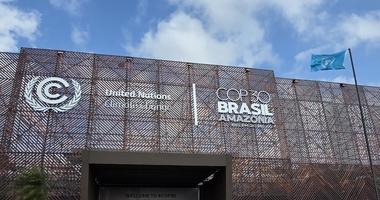
Except, today, the world’ pre-eminent climate summit is increasingly shaped by the industry and interests making trillions each year by producing these emissions. At last year’s COP 30 in Belém, Brazil, for example, a record 1,600-plus fossil fuel lobbyists flooded the summit. Then, when more than 80 countries made demands for a roadmap for fossil fuel transition the core fight of the conference, a handful of petrostates exploited arcane COP procedures to veto the proposal and ensure no mention of fossil fuels even appeared in the final decision text.
The failure stung – but it also provided a spark for what could yet be a turning point in the global climate fight.
For countries like Colombia and the Netherlands that had led the roadmap push, seeing yet another attempt to tackle energy transition at COP sunk by petrostate opposition was a sign that the COP process wasn’t going to deliver without serious strengthening measures.
What they proposed was to create a place for a “coalition of the willing” to come together to work out the practical steps of a true global energy transition. Including a timeline for phasing out fossil fuels and a financing plan to make it fair. A place outside the current COP process but close enough in format that it could serve as a model and inspiration for future COPs. All without the threat of petrostate or industry sabotage.
Enter: the Santa Marta conference. The conference features multiple days for discussion around the Fossil Fuel Treaty and civil society organizing, along with two days of high-level meetings between nations and civil society organizations “aimed at discussing concrete courses of action to transition away from fossil fuels.”
It’s the “concrete course of action” part in particular that should excite anyone with a vested interest in a livable planet (and affordable cost of living). Because now countries aren’t talking about aspirations and if transitioning away from fossil fuels is even possible. They’re talking about how they’ll actually do it.
Because the World Is Looking for a New Way Forward
Even outside the current conflict and fragility of the oil industry shocking the global economy, the fundamentals for a transition to abundant, reliable clean energy have never been better.
For decades, the principle barrier to widespread clean energy adoption was cost. Especially for developing nations looking for the cheapest energy possible.
Today, that barrier is becoming increasingly a non-issue. Rapidly falling prices for solar panels, wind turbines, and batteries have made clean energy the flat-out cheapest form of new electricity almost everywhere. And unlike volatile gas and oil prices that surge and plummet with world events leaving consumers never entirely sure what they’ll be paying next month, the price of sunshine and wind never changes.
Cheaper costs is just one of the many reasons clean technology sales are surging in 2026. Greater energy security is another. As the analysts at Ember lay out, one of the inherent advantages renewables offer over fossil fuels is that they’re buy-once technologies that don’t need the same constant resupply as their dirtier alternatives. This translates into the ability to generate cheap and abundant electricity at home rather than relying on erratic partners, offering a path to something like real peace of mind – energy security and protection from political whims and global shocks of all kinds.
In the current conflict, this is playing out in real time – and in a world beginning to split between electro–states and petrostates, the winners are clear. Spain and Portugal, for example, invested heavily in renewables and have seen electricity prices decline in the midst of the conflict. In Pakistan, rooftop solar has insulated the nation from some of the crippling energy shortages facing neighboring countries. In China, clean technologies drove more than one-third of GDP growth.
For both consumers and countries worldwide, the takeaway could not be any more obvious. In Europe, demand for solar panels is surging. Global electric vehicle sales jumped 66% in March. Chinese solar panel exports doubled in a month after the conflict began. The opportunity now is to turn these reactions and trends into coordinated and sustained progress globally.
Three Issues Santa Marta Has to Tackle
Even with all the inherent advantages clean energy offers, energy transition on a national and global scale does come with real challenges. Starting with the many ways fossil energy has embedded in government policy and everyday life for decades. And that’s before we even get to the lobbying power of an industry fighting tooth and nail to protect a market valued at $6.25 trillion in 2022, according to one report.
Figuring out practical solutions to these challenges that not only are fast enough to slow rising temperatures but fair for working families and developing countries without the capital for massive energy investment is one of the key tasks of the Santa Marta conference.
With time limited, here are the three highest-impact issues negotiators need to address.
Step One: Reform Fossil Fuel Subsidies
Fossil fuel subsidies profoundly distort the energy market, stacking the deck in favor of oil, coal, and gas producers to the tune of over $7 trillion in 2022 alone. This figure includes $1.26 trillion in direct payments of your tax dollars to some of the wealthiest companies on Earth. It also includes indirect subsidies including price supports for working families and health costs of pollution and climate change fossil producers shift onto citizens and governments, to name just a couple.
Unwinding these subsidies and giving clean energy a fair shot is a complex matter, given that some protect working families from crippling price swings. The Netherlands has already shown there is a way to do this and begin phasing out subsidies while protecting economically vulnerable populations.
In practice, the first place to start is phasing out subsidies for exploration and development of new projects, making fossil fuels compete on cost with clean energy and encouraging companies and countries to shift to the cheaper option.
The next step is phasing out subsidies for energy-intensive industries and higher-income consumers, while directing savings to clean energy development projects and infrastructure and worker retraining and economic diversification programs. Minimizing the impact of subsidy phaseout on the most vulnerable will be critical.
As former US Vice President Al Gore has noted, the amount the world is spending subsidizing the fossil fuels accelerating climate change is roughly the amount analysts have estimated we need for a global shift to clean energy. It boils down to a matter of moving the money. To get there, the world will be looking to Santa Marta for a full set of options for countries to phase out fossil subsidies at home and cooperation on a global phaseout.
Step Two: Prevent Fossil Gas From Being Labeled as a Transition or Clean Fuel
It’s one of the industry’s favorite moves: Sell natural/fracked/fossil gas as “clean energy” in public policy and energy transition plans. And with the backing of petrostates and dark money donors, it’s worked everywhere from US states like Ohio to COP summits.
As with most disinformation, the strategy works because there is a tiny kernel of truth. Burning gas does generate less carbon dioxide than burning coal. But that’s only one part of the picture. Because gas production is one of the largest sources of methane, a gas with more than 80 times the heat-trapping power of carbon dioxide in the short term. When transported as liquified natural gas (LNG), inviting more methane leaks and emissions from shipping, gas can even have a greater carbon footprint than coal.
Claims of gas-as-transition-fuel conveniently ignore these facts, along with the reality that infrastructure like combined gas cycle gas plants can have a typical lifespan of 25–30 years. Meaning that countries that invest billions in gas infrastructure are unlikely to abandon it before the end of its lifespan. Which is exactly the point.
Policymakers at Santa Marta must resist this temptation and develop clear taxonomies that align with IPCC and IEA net zero scenarios for what counts for energy transition and what doesn’t, allowing time-bound use of gas in transition plans only where no feasible alternatives exist.
Clarity has the benefit of raising the cost of capital for fossil development to a fair level while lowering it for clean energy developers. This accelerates the investment shift from dirty to clean and helping nations avoid the trap of stranded assets and being locked into outdated and expensive fossil power in a world rapidly moving to cheap renewables.
Step Three: Reduce Fossil Fuel Influence with Enlightened Leadership
For decades, petrostates and industry voices have gamed the COP system to sink any ambitious effort to slash emissions and speed energy transition. Santa Marta is a chance to develop a new process that shows the COP presidencies leading future conferences how it should be done.
A key part of this is by establishing new norms for climate negotiations, starting by excluding fossil fuel industry voices from any leadership positions. Another is ambitious commitments to quickly phase out fossil use and expand clean energy from leading nations. There are others involving committing to real transparency and removing conflicts of interest, but the goal is to create an enabling environment for real progress that challenges COP to follow.
An Opening for Yes
The American poet Wallace Stevens once wrote, “After the final no there comes a yes. And on that yes the future world depends.”
After years of fossil resurgence, denial rebranded as “climate realism,” and White House assault on truth – no, no, no – we have an opening for yes.
Maybe not quite the final yes – or even the penultimate. But a decisive yes and possibly a turning point. With the war in Iran and price shocks making the case for leaving fossil fuels in countless languages worldwide, the world will be watching the Santa Marta conference for a practical plan to do it. And on that yes, our future world may well depend.
READ MORE
-
 March 27, 2026
New York Can’t Back Down on Its Climate Goals
-
 February 27, 2026
Unblock Plug-In Solar: A Simple Fix to Rising US Electricity Prices
-
 December 18, 2025
Ten Years After the Paris Agreement, COP Has to Change


