

Why COP 31 Fell Short
Petrostates refusing to allow any mention of fossil fuels at UN climate talks shows why the COP process has to change.
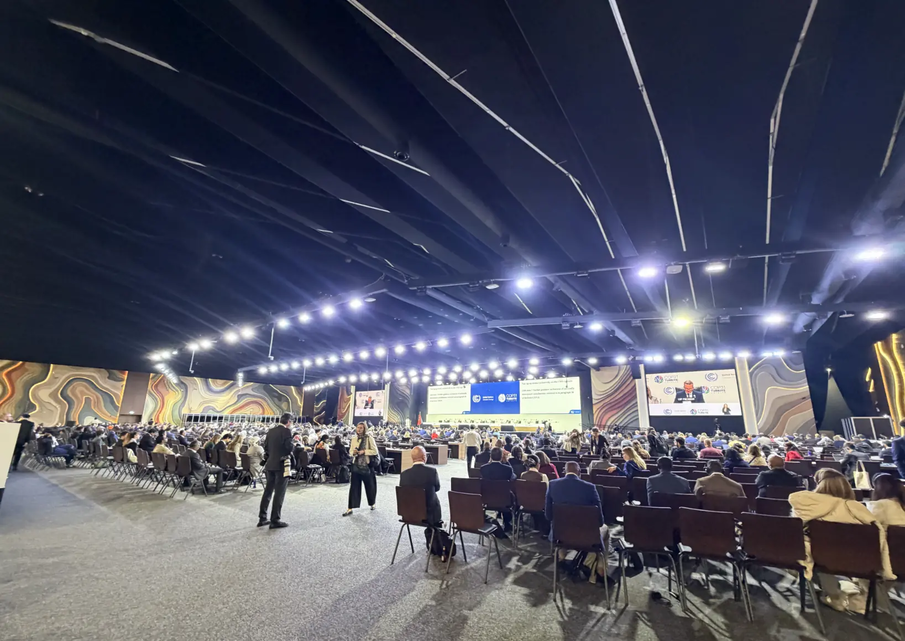
To understand why the UN COP 31 climate talks collapsed in Antalya, Türkiye on Sunday with only a few decisions and without a political deal, there’s no better place to look than the slogan filling every available space at the conference: Dialogue. Consensus. Action.
For years, petrostates like Saudi Arabia have used the requirement for consensus – with its appeal to multilateralism – to effectively veto any COP decision or action that might threaten global reliance on the fossil fuel business earning the kingdom alone $170,000 every minute. And for years – despite the increasing evidence of the consequences of their business model in growing climate disasters – they’ve gotten away with it.
At COP 31, coming in the wake of the “biggest energy crisis in history” triggered by war in the Middle East and a UN report showing the world on track to blow past the
the Paris Agreement goal of limiting warming to 1.5 degrees Celsius, the world finally decided enough was enough.
No Deal Was Better Than a Bad Deal
Early versions of the proposed draft political agreement from the summit – known as the “cover decision” – included some cause for optimism, with calls for accelerating a transition away from fossil fuels and the 35x35 goal of meeting 35% of final energy demand with electricity by 2035 pushed by co-host Türkiye.
But interventions from Saudi Arabia and other petrostates made sure that any mention of fossil fuels disappeared from the text, replaced with an emphasis on carbon capture technologies widely seen as a license for oil and gas producers to keep producing.
In response, European nations joined with members of the High Ambition Coalition of small island states, African countries, and other developed nations to create a proposal demanding any final deal include mention of transitioning away from fossil fuels and eliminate mention of carbon capture.
But the proposal – backed by about 130 countries – ran into petrostate opposition and failed to make it into the final decision draft. After neither side budged and talks ran for a record 45 hours of overtime, Türkiye’s COP president, Murat Kurum, closed the summit without a deal, saying, “We recognize that there is no consensus on this document. Therefore, these decisions have not been adopted.”
It was the first time since 2009 that COP had failed like this. It was also the right outcome when petrostates once again stood in the way of progress for everyone.
As Darragh O’Brien, Ireland’s minister of climate, environment and energy, said of the proposed agreement, “It fails to meet the moment,” noting that it’s “unconscionable that we would have a climate pact that makes no reference to fossil fuel.”
Petrostates Make the Case for COP Reform
The breakdown in talks shows the core weakness of the COP process, where a small group of nations can effectively stop progress for the entire planet, a fact former US President Al Gore has characterized as “literally insane.”
Consensus, however, is not the only way forward. If there is any silver lining in the breakdown it’s the growing awareness for the need to reform the COP process.
Two procedural reforms in particular can be instrumental here. First, changing the decision-making rules so that there is an option for voting if consensus cannot be found. Second, minimizing or eliminating conflicts of interest from the COP to prevent fossil fuel lobbyists and other actors fundamentally opposed to climate action from influencing negotiations. Reports are that upwards of 130 countries were aligned on the need to prevent backsliding. This is exactly the two-thirds majority that would have been needed to vote on and adopt a more ambitious text under the Paris Agreement, according to the dormant rule 42 of the United Nations Framework Convention on Climate Change rules of procedure. Unfortunately in Antalya, the COP 31 presidency chose to prioritize the minority view.
Several countries – led by those in the AILAC coalition of Caribbean and Latin American countries and the Environmental Integrity Group, among others – were vocal about the need for a voting option for decision making and for addressing conflicts of interest. The challenge now is to build this coalition and drive reforms that can prevent fossil fuel obstruction going forward.

Progress Continues Outside of COP
Despite the failure to reach a cover decision, COP 31 saw numerous nations announce plans to create roadmaps for replacing fossil fuels with clean energy. This announcement is part of a growing trend of countries turning to parallel processes outside of COP to drive progress without petrostate obstruction.
Momentum is building. The First International Conference on Transitioning Away from Fossil Fuels in Santa Marta, Colombia earlier this year offered a new way forward, with some 57 nations sharing lessons learned and collaborating on plans to accelerate clean electrification. The second conference, scheduled for Tuvalu in 2027, presents a chance to build and bring even more nations into the process.
What’s Next
The issues that derailed COP 31 are not going away anytime soon. When nations head to Addis Adiba, Ethiopia for next year’s COP 32 summit, petrostates will still be able to use the same rules of procedure to grind out another stalemate and limit any ambitious moves.
But what we’ve seen before is – as Bloomberg journalist Jennifer Dlouhy notes – the failure of one COP can create the seeds for success of another, laying bare what isn’t working and what has to change. The failure of COP 15 in 2009 ultimately laid the groundwork for the success of the Paris Agreement in 2015.
Plus, with the world moving deeper into what the International Energy Agency calls “the Age of Electricity” and affordability remaining the top issue for populations worldwide, the challenge for politicians and businesses alike is to meet that demand for electricity as affordably and reliably as possible. And with clean energy still the cheapest form of new electricity almost everywhere, the answer for more and more countries is going to be renewables, not fossil fuels.
Which is to say that opportunities and cost, as much as COPs, will shape the future of energy policy and our planet going forward. Petrostates can block negotiations but they cannot stand in the way of billions dreaming of a better life on a functioning planet. Or the market logic of clean energy as the most affordable way to get there. Or as former Panamanian climate envoy Juan Carlos Monterrey Gómez writes, “The green economy will not win because a text tells it to. It will win because it is cheaper, smarter and creates more jobs. The future will not be negotiated.”
READ MORE
-
 November 16, 2026
The Votes Are Counted. Let's Shape What Comes Next.
-
 November 4, 2026
Why COP 31 Might Be the Weirdest COP in Years
-
 September 28, 2026
The World Bank's Balancing Act Tips Downhill on Climate


